
Electric Cars for Uber Drivers UK: Should You Make the Switch?
An electric car could reduce your running costs, especially if you can charge cheaply at home. But whether it suits Uber work depends on how far you drive, where you charge and what the car costs you overall.
For some drivers, charging overnight could fit easily around their shifts. For others, finding a charger between jobs could make the working day harder.
When looking at electric cars for Uber drivers, I would start with your normal working week. The right car needs to fit that routine without stretching your budget.

Editor’s note:
You do not need to replace a reliable car just because more drivers are going electric. This guide will help you decide whether switching makes sense for you now or whether you are better off waiting.
Electric cars for Uber drivers: are they worth it?
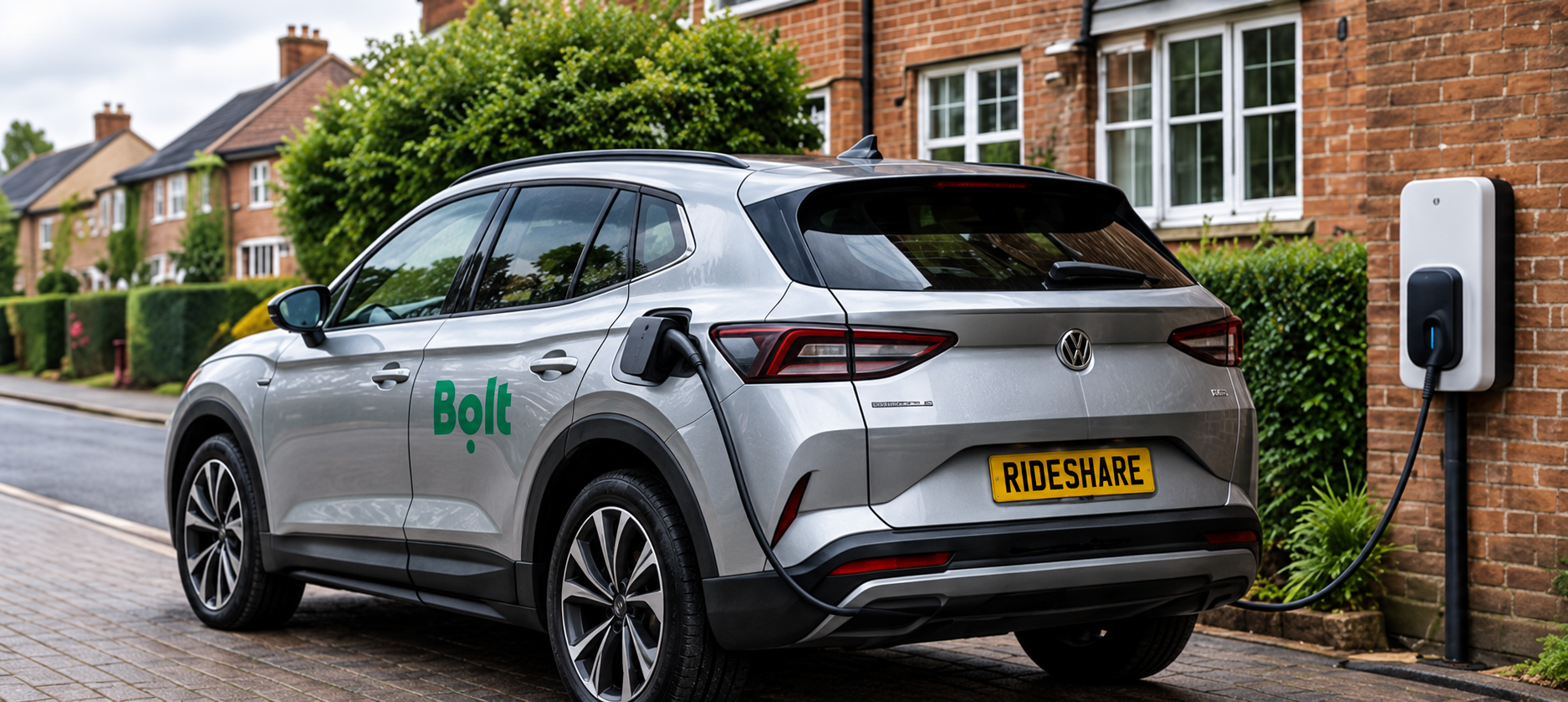
They can be, particularly when you have dependable charging and enough range for your work. An electric vehicle, often shortened to EV, runs on a battery that you recharge rather than filling up with petrol or diesel.
Here, we are talking about fully electric cars. A hybrid also has a petrol or diesel engine, so it works differently.
The appeal is easy to understand. Charging at a reasonable price could leave you spending less on energy, while charging overnight could mean fewer stops during your shift. EVs do not need engine oil changes, but they still need servicing, tyres and repairs.
The difficulty is that another driver’s savings may not apply to you. Someone charging on a cheap home tariff has different costs from someone relying on public rapid chargers.
| Your situation | What it means for switching |
|---|---|
| You can charge where you park overnight | You may be able to start work charged and avoid regular charging stops. |
| You depend on public chargers | Prices, availability and time spent charging become more important. |
| You often take long, unpredictable journeys | You need enough range and dependable charging away from home. |
| Your current car is reliable and affordable | Keeping it could cost less overall than replacing it. |
Electric, plug-in hybrid or ordinary hybrid?
These names can be confusing when you are comparing cars. The main difference is whether you need to plug in and whether you still have an engine.
| Type of car | How it works | What it means for your work |
|---|---|---|
| Fully electric — EV | Runs on a battery and needs plugging in. | Your shifts need to fit its range and charging options. |
| Plug-in hybrid — PHEV | Has an engine and a larger rechargeable battery than an ordinary hybrid. | Can cover some driving on electricity, with fuel available for longer journeys. |
| Ordinary full hybrid — HEV | Uses an engine and electric motor, without plugging in. | You still buy fuel, but do not need to plan charging stops. |
A plug-in hybrid may appeal if you can charge regularly but want an engine for longer journeys. The important question is how much of your working day you would actually cover using electricity.
If its battery covers only a small part of a long shift, much of your work will still involve fuel. I would compare its costs using your actual mileage rather than assuming it offers the cheapest parts of both systems.
An ordinary hybrid is worth comparing if convenient charging is not available. It removes the need to plug in, although its suitability still depends on the exact car, fuel costs and licensing rules.
Neither option suits every driver. What matters is whether the car can handle your work at a cost you can afford.
Where would you charge your car?
If you can charge at home
Before buying, it is worth finding out what installation would cost and whether you need permission from a landlord or another property owner. That gives you a firmer figure to include in your budget.
The electricity tariff matters as well. A low overnight price may help with charging, but higher daytime prices could increase the rest of your household bill. The cheaper hours also need to give you enough time to replace the energy you use.
If you cannot charge at home
A nearby charging site is more useful if you can actually use it at your normal working times. Its price, parking restrictions and availability all matter.
For example, charging during a meal break could fit your routine. Driving out of your way and waiting for a space during a busy evening may be harder to justify.
I would want a backup location too, so one unavailable charger does not leave you struggling to finish work.
Would an electric car actually save you money?
When comparing electric cars for Uber drivers, the charging price can make a large difference. To show how, imagine you buy 40 units of electricity and those units let the car travel 140 miles.
Electricity is measured in kilowatt-hours, written as kWh. In this example, 40 kWh is simply 40 units.
| Illustrative charging price | Cost of 40 units | Energy cost for the example 140 miles |
|---|---|---|
| 10p per unit | £4 | About 2.9p per mile |
| 30p per unit | £12 | About 8.6p per mile |
| 75p per unit | £30 | About 21.4p per mile |
The same amount of electricity costs £4 in the first example and £30 in the last. That is why a saving based on home charging should not be applied to a driver using expensive public charging.
Your current fuel spending gives you a useful comparison. Over a representative week, divide the amount spent on fuel by all the miles driven, including pickups and returning home. Using similar starting and finishing fuel levels makes that comparison more useful.
The car payments matter too
Lower charging costs will not necessarily cover a higher monthly car payment. Insurance, tyres, servicing, vehicle tax and charger installation also affect what you have left.
If you are buying, there is the loss in the car’s value before you sell it. A rental or lease has different costs, including any deposit, mileage limit and excess-mileage charges.
Private-hire use needs to be permitted by the agreement. A low monthly price is less helpful if the contract does not suit your work.
For a longer-term budget, tax matters too. Electric cars have paid vehicle tax since April 2025, with the amount depending on the vehicle and registration date.
The government also plans an additional mileage-based charge from April 2028, at 3p per mile for fully electric cars. That would be £900 for 30,000 miles; it is a future planned charge, not one payable today.
Could buying an electric car reduce your tax bill?
If you buy a qualifying new and unused electric car for your business, you may be able to deduct its full qualifying cost from your taxable profits in the first year. This is called a 100% first-year allowance.
That does not mean you get the price of the car back. It reduces the profit you pay tax on. For example, a £30,000 deduction would reduce tax by £6,000 if the applicable tax rate were 20%. Your actual saving depends on your tax position.
This can apply to self-employed drivers as well as limited companies. However, a self-employed driver who also uses the car personally can only claim the business-use share. If you claim a fixed amount per business mile through HMRC’s simplified expenses method, you cannot also claim this allowance for the same car.
Used electric cars and hybrids do not qualify for this particular 100% allowance, although other capital allowances may be available.
The current qualifying deadlines are 31 March 2027 for limited companies and 5 April 2027 for self-employed businesses. Before including a tax saving in your car budget, ask an accountant to confirm what you can claim.
Will one charge cover your shift?
The range in an advert is measured under standardised test conditions. Your own range can differ, especially in winter or during faster motorway driving.
A busy shift also includes more than paid journeys. There are miles to pickups, driving between areas and the journey home.
For example, a driver regularly covering 180 miles should not assume that an advertised 200-mile range provides a comfortable margin. A cold day or an unexpected airport return could change the plan.
That does not mean every driver needs the biggest battery. Someone working shorter local shifts may have different needs from someone regularly taking long-distance bookings.
The useful question is whether the exact version you are considering can cover your work with a sensible reserve. Battery size and charging ability can differ between versions of the same model.
How much time would charging take?
Charging overnight may need little adjustment to your working day. Charging during a shift needs more thought because it can take time away from bookings.
A quoted 30-minute charging session is not necessarily a 30-minute stop. There may also be a journey to the charger, a queue and a drive back to your usual working area.
The car’s own charging ability matters too. Plugging into a more powerful charger will not make it accept more power than it supports.
For a driver who regularly charges between jobs, the useful comparison is how quickly a car adds the miles needed to carry on working. The longest advertised range is only part of that decision.
Can you use any electric car for Uber?
Being electric does not automatically make a car suitable or eligible. Uber currently requires an appropriate private-hire vehicle licence, insurance and compliance with its vehicle rules.
Its electric option is for fully electric vehicles with at least four passenger seats and a private-hire vehicle licence from an accepted council. Hybrids are excluded. Other categories, including Comfort and Exec, have separate requirements.
The licensing authority’s rules matter alongside Uber’s. Before committing to a car, the exact model and age need to be acceptable for the licence and work you intend to do.
What about London?
London has separate requirements. Since January 2023, vehicles licensed as private-hire cars for the first time must be zero emission capable and meet TfL’s applicable emissions rules. Zero emission capable does not always mean fully electric.
As checked on 6 November 2026, TfL is consulting on requiring most vehicles new to private-hire licensing to be fully electric from 3 July 2028. This remains a proposal, with a later proposed date for wheelchair-accessible vehicles.
London drivers should also avoid older advice claiming electric cars pay no Congestion Charge. The full discount has ended; eligible electric cars on Auto Pay currently receive a 25% discount.
What else matters before buying?
Comfort and space
You will spend hours in the driver’s seat, while passengers need enough room in the back. A comfortable driving position, easy access and a useful boot all deserve attention alongside range.
An airport driver may want to try their usual luggage in the boot. A car with enough seats can still be awkward for suitcases or passengers getting in and out.
Insurance and battery warranty
An insurance quote for the exact car could change the figures, so it belongs in the comparison before you pay a deposit. Passenger work still needs suitable private-hire cover.
For a fuller explanation, read my Uber driver insurance guide.
The battery warranty is worth reading separately from the vehicle warranty. Its mileage limit, capacity conditions and treatment of private-hire use matter more than the number of years in the headline.
For example, a warranty with 40,000 miles remaining would reach that mileage limit in a year if you drive 40,000 miles annually, even if several years remain on its time limit.
New or used?
A used EV may bring the purchase price within reach, but the exact battery, charging capability and remaining warranty still need attention. Some older cars also had batteries leased separately from the vehicle.
Battery-health evidence can help you understand what you are buying. The range shown on the dashboard should not be your only evidence of battery condition.
Should you make the switch?
Electric cars for Uber drivers are worth considering when charging fits around your shifts, the range suits your work and the overall cost is affordable.
For example, a driver doing mainly local shifts and charging at home between working days could find an EV straightforward to live with. Someone taking unpredictable long-distance bookings without dependable charging may need more flexibility.
In that second situation, a hybrid is worth comparing. A plug-in hybrid still needs regular charging to make useful use of its electric range, while an ordinary hybrid avoids plugging in altogether. Neither should be chosen without checking the costs and vehicle eligibility.
These are examples, rather than promises about which car will suit you. A useful starting point is one normal week’s mileage and fuel spending, compared with the full cost of the cars you are considering.
I would not build the decision around extra bookings or the cheapest advertised charging rate. If the figures only work under ideal conditions, I would take more time before committing.
Once the costs make sense, a test drive can help you decide whether the car suits you and your passengers. If they do not, keeping a suitable, reliable car for longer may be the better choice.