
Uber Insurance UK: Everything You Need to Know
Uber insurance for carrying paying passengers in the UK needs to cover private-hire work. Ordinary personal car insurance is not enough. If you also deliver food or parcels, check that your policy includes those activities.
Uber explains its private hire insurance requirements here.
I’ve previously worked as a private-hire driver and have also briefly done Uber delivery using pay-as-you-go (PAYG) insurance. This guide brings that background together with research into the current requirements, explaining what to check before you start, renew your cover or add another type of work.
I’d begin with what you intend to carry: passengers, food, parcels, or a mixture. That gives you a clearer starting point when looking at insurance.

Editor’s note:
This guide provides general information, rather than a recommendation of a policy for your individual circumstances. Confirm your cover with your insurer or broker and check your licensing authority’s requirements.
What insurance do you need for the work you do?
Use this table to identify the type of cover to ask about. The insurer still needs to confirm the activities, vehicle and drivers covered.
| Your work | Cover to ask about | What needs checking |
|---|---|---|
| Uber passenger trips and other private-hire bookings | Private hire motor insurance, including passenger hire and reward | Your licensing authority, operator requirements and permitted work |
| Public-hire taxi work | Public-hire taxi motor insurance | The taxi work your licence permits, including rank or street pickups where applicable |
| Paid takeaway and food deliveries | Food delivery motor insurance, including the relevant hire and reward use | Hot food, supported platforms and any local takeaway work |
| Parcel and courier deliveries | Courier motor insurance covering carriage of goods for hire and reward | Platforms, goods carried and any separate goods in transit requirement |
| Passenger trips alongside deliveries | Cover expressly including both activities | Food and parcels should each be confirmed rather than assumed |
| Alcohol and other age-restricted deliveries | Delivery motor cover permitting the goods and activity | Policy restrictions and the platform’s delivery and age-check rules |
What does hire and reward insurance mean?
However, the words alone do not tell you everything a policy allows. Passenger transport, takeaway deliveries and parcel work can have different terms and exclusions.
Standard business use is different too. Driving to meetings or between workplaces does not automatically give you permission to carry paying passengers or deliver customers’ orders.
I would explain the work in plain language when asking for a quote. “I carry Uber passengers and deliver hot food at weekends” gives the insurer something specific to confirm. Sources: Zego on business use and deliveries and INSHUR on courier cover.
Uber insurance, private hire insurance and taxi insurance
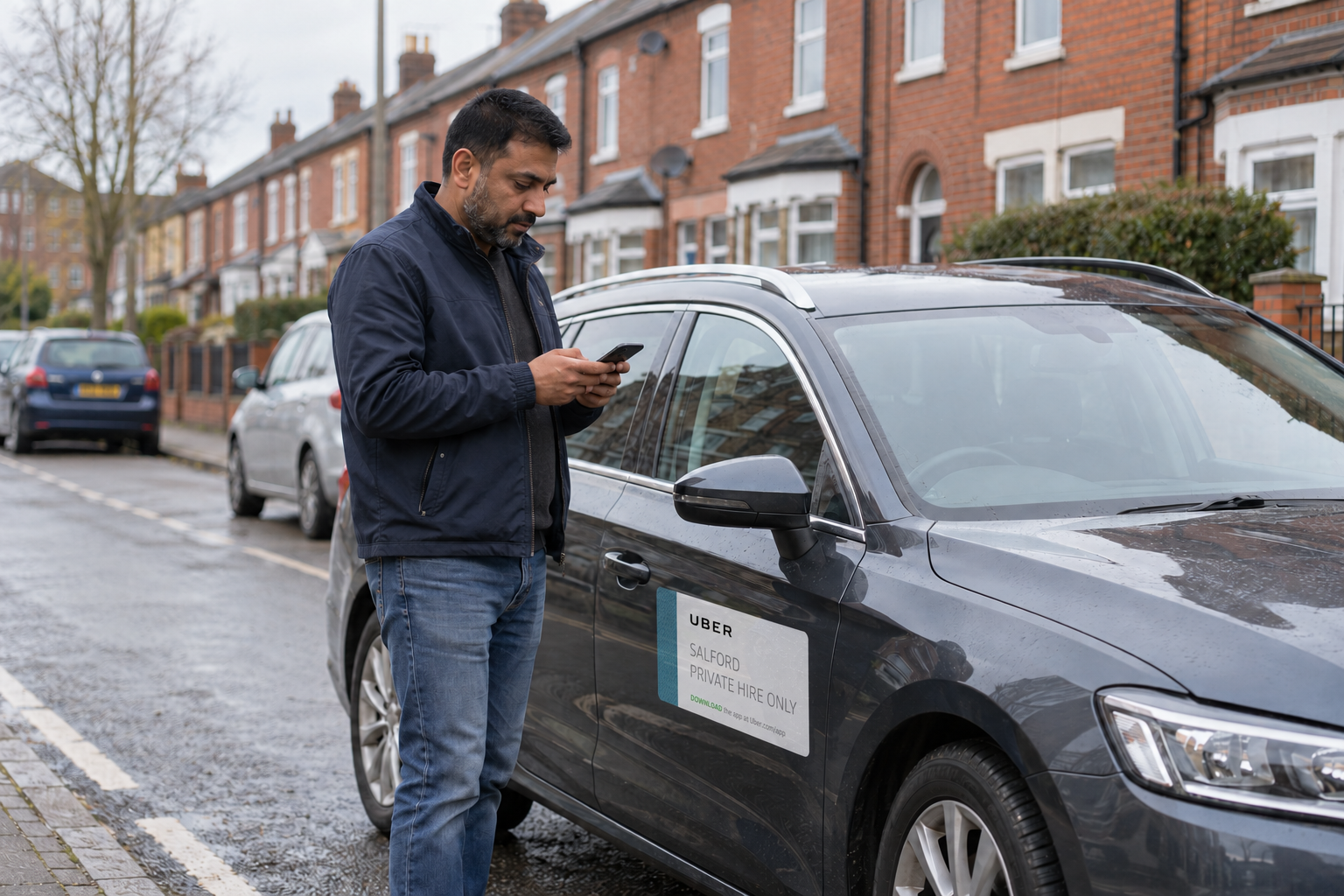
Private hire insurance for Uber drivers
The policy needs to cover your private-hire activity. Tell the insurer about the operators you work through, any other driving work and whether you also use the car personally.
Uber requires suitable insurance documents before you can carry passengers through its platform. Insurance acceptance is one part of getting started; you also need the relevant driver and vehicle licences. See Uber’s document requirements.
Public hire and private hire are different
Tell the insurer which licence and type of work you have. A policy described broadly as “taxi insurance” still needs to match your actual operation. Sources: GOV.UK vehicle licensing, Scottish Government guidance and Northern Ireland taxi classes.
London and Uber’s insurer verification requirements
Outside London, Uber says another provider can be used if the cover meets the licensing authority’s requirements and Uber’s document-verification requirements.
Check Uber’s current PHV insurance requirements before buying. Being on its London list concerns document verification; it does not establish that a particular policy or price suits you.
Does Uber provide insurance for drivers?
Partner Protection offers eligible drivers and couriers benefits for specified events, such as certain injuries or sickness, subject to its terms. Uber expressly says it does not replace compulsory commercial motor insurance.
If you want protection for your income when you cannot work, read the scheme’s eligibility rules, payment limits and exclusions before deciding whether you need separate cover. See Uber’s Partner Protection terms and information.
What does Uber insurance cover?
The permitted use of the vehicle and the level of cover are separate questions. Comprehensive personal insurance does not become private hire insurance simply because it offers a higher level of protection.
| Level of cover | Broad purpose |
|---|---|
| Third party only | Covers liability for injury to other people and damage to their property, subject to the policy |
| Third party, fire and theft | Adds cover for specified fire and theft losses involving your vehicle |
| Comprehensive | Also includes accidental damage to your own vehicle, subject to the policy’s terms and excesses |
Comprehensive cover still has limits. Read the exclusions, endorsements and permitted-use wording rather than treating the label as a promise that everything is included. Sources: ABI commercial motor guidance and MoneyHelper’s car insurance guide.
Food delivery insurance for Uber Eats, Deliveroo and Just Eat
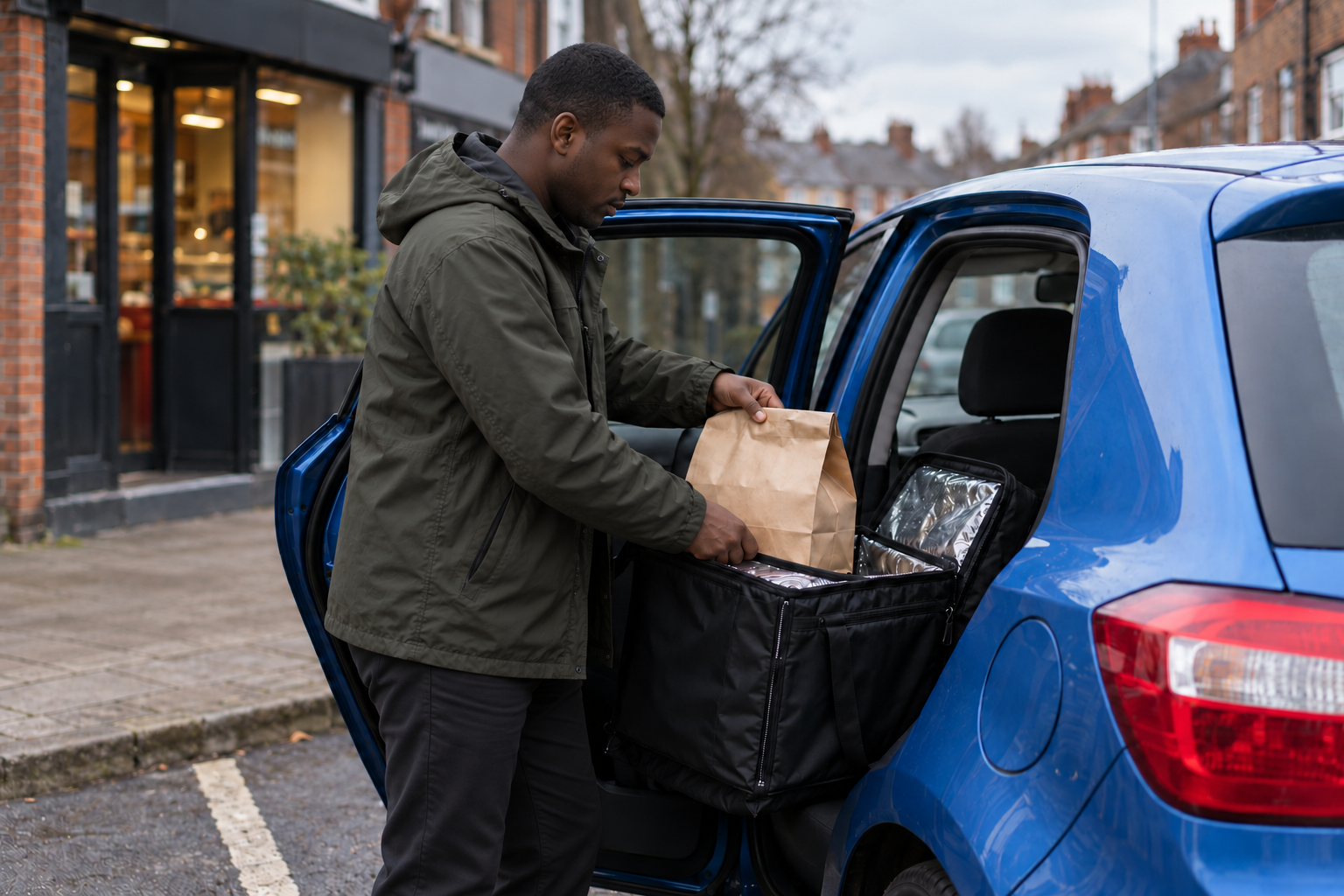
If you deliver with Uber Eats using a car, motorbike or scooter, Uber requires a motor insurance certificate covering food delivery, or hire and reward that does not exclude food delivery.
When arranging cover for Uber Eats, Deliveroo, Just Eat or a local takeaway, name each type of work. Ask whether hot-food delivery and all the platforms you use are included.
You may see combined policies for personal driving and deliveries, or separate hire and reward cover alongside an existing personal policy. These arrangements need different checks. See Uber’s delivery insurance requirements and Zego’s explanation of delivery cover.
Check how top-up delivery insurance works
Also establish when delivery cover starts and stops. Ask about waiting for work, travelling to collect an order and driving after a delivery. Do not assume every stage is covered in the same way.
Bicycles and electric bikes
That does not answer every insurance question for a delivery rider. Check the platform’s requirements and any personal accident, theft or liability protection you want separately. See GOV.UK’s electric bike rules.
Parcel delivery and courier insurance

For paid parcel work, ask about courier motor insurance covering carriage of goods for hire and reward. Confirm whether your policy permits parcel work as well as food delivery.
For Amazon Flex, check its current onboarding requirements rather than assuming the platform supplies your motor insurance. Amazon’s UK guidance requires suitable hire and reward cover, and specialist pay-as-you-go products are available.
Explain whether you will use a car or van and name the businesses you expect to deliver for. Do not assume acceptance for one platform establishes acceptance for another. Sources: INSHUR courier insurance and Amazon Flex UK requirements.
Goods in transit insurance protects a different risk
Check whether your courier contract requires it and what limit is needed. Ask about excluded goods, theft conditions, unattended vehicles, and cover during loading and unloading.
The vehicle, the goods and your liability can involve separate sections of cover. Ask the broker to explain which policy responds to each. See Radius’s goods in transit explanation.
Alcohol and other age-restricted deliveries
Insurance is only one part of accepting these orders. You also need to follow the platform’s procedures and applicable local law. Uber’s community guidelines address age verification and refusing alcohol delivery where the recipient is underage or appears intoxicated.
“Adult delivery” is a broad category on some websites, rather than a precise description of an insurance product. Explain the actual goods instead of asking for a policy under that label.
For a new type of order, I would check both the insurance position and the delivery rules before accepting it. Approval to deliver food is not an answer to every question about restricted goods. See Uber’s community guidelines.
Can one policy cover Uber passengers and deliveries?
Tell the insurer about the full working pattern before you buy. If you later add a delivery platform or start carrying a different type of load, ask whether the policy needs changing first.
This is particularly useful when comparing quotes. A cheaper quote covering only passenger work is not a like-for-like alternative to one covering passengers and deliveries. See Zego’s explanation of combined private hire and delivery cover.
Annual, monthly and pay-as-you-go insurance
Policy duration and payment method can easily be confused.
| Arrangement | What to establish |
|---|---|
| Annual policy | A policy lasting a year; check the premium, terms and cancellation charges |
| Annual policy paid in monthly instalments | Still an annual policy; check any credit agreement, interest and total payable |
| Short-term or 30-day policy | Check the actual duration, renewal arrangements and any fees |
| Pay-as-you-go delivery cover | Check eligible platforms, activation rules, minimum charges and any underlying policy requirement |
A small monthly payment does not establish that you can cancel without further cost. Read the payment and cancellation terms together. Sources: Acorn’s guide to policy options, MoneyHelper on instalments and Zego on delivery arrangements.
How much does Uber insurance cost in the UK?
I would treat an advertised starting price as a reason to request a quote. It is not a reliable budget for your own circumstances.
When comparing prices, use the same details and requirements throughout. Ask how the provider treats any existing private-car or taxi no-claims history rather than assuming it transfers automatically. Sources: Zego’s private hire cost factors and its explanation of new-driver no-claims history.
What I would compare alongside the price
Total payable: Include instalment costs, fees and the extras you need.
Excesses: Check what you would contribute to different claims.
Permitted work: Confirm passengers, food, parcels and personal use as applicable.
Replacement vehicle: Ask whether it would be suitable, licensed and insured for your work, and when it would be available.
Breakdown assistance: Ask whether taxi or courier use is included.
Changes and cancellation: Check the cost of changing vehicles, adding work or ending cover.
Claims support: Establish who handles a claim and how to contact them.
These questions give you a more useful comparison than the premium alone. Replacement-vehicle and other optional benefits have their own conditions, so ask for the relevant wording. See Zego’s examples of optional policy benefits.
Do you need public liability or personal accident insurance?
Public liability insurance concerns claims for injury or property damage connected with your business activities, subject to the policy. Ask how it applies to the work you do away from the vehicle and whether your contract requires it.
Personal accident cover and income protection address different questions about injury or being unable to work. Their definitions, payment limits and exclusions need checking separately.
These products do not replace motor insurance. Before adding them, find out what you already have through existing policies or a platform scheme and where any gaps remain. Sources: Business.gov.uk on business insurance and Uber Partner Protection.
What documents should you check before starting work?
For Uber passenger work, check the current insurance-document requirements for your account and location. The certificate and supporting documents need to identify the correct driver and vehicle and show appropriate cover.
If you rent a vehicle or drive under a fleet policy, Uber may also require a hire agreement, permission letter, vehicle schedule or driver schedule.
I would keep the following together:
- The current insurance certificate and policy schedule.
- The full wording, endorsements and statement of fact.
- Written confirmation of any activity that needed clarification.
- Any rental, fleet or permission documents required.
- Claims contact details and the renewal date.
Check the details when documents arrive, while there is time to correct an error. See Uber’s current document requirements.
What happens if you use the wrong insurance?
Having an insured vehicle does not automatically mean you are insured for the journey you are making. GOV.UK warns that you can be penalised if you are not correctly insured to drive it.
The published penalties include a possible £300 fixed penalty and six points. Court proceedings can result in an unlimited fine or disqualification, and the police can seize an uninsured vehicle.
If you are unsure whether new work is included, resolve it before taking the job. See GOV.UK’s uninsured driving guidance.
Questions about Uber, taxi and delivery insurance
Before you arrange cover
Then check the permitted use, exclusions, excesses and total cost. If an answer is unclear, ask the insurer or broker to confirm it in writing. That gives you something useful to check against the documents when the policy arrives.